ELECTRICAL COLOUR CODES AND VOLTAGE SUPPLIES
Colour codes are standardized wire colours used to identify the function of each conductor in an electrical circuit. They help electricians connect circuits safely and correctly.
Voltage supply is the electrical pressure that pushes current through a circuit.
At the end of this lesson, the students will be able to:
- describe what is a cable.
- identify the difference between a conductor and an insulator for a cable.
- list different types of cables.
- identify different sizes of cables.
- recall the colour code for cables.
- identify the voltage supplies used by the different cable colours.
- remove the insulation from the cable using the appropriate tools.
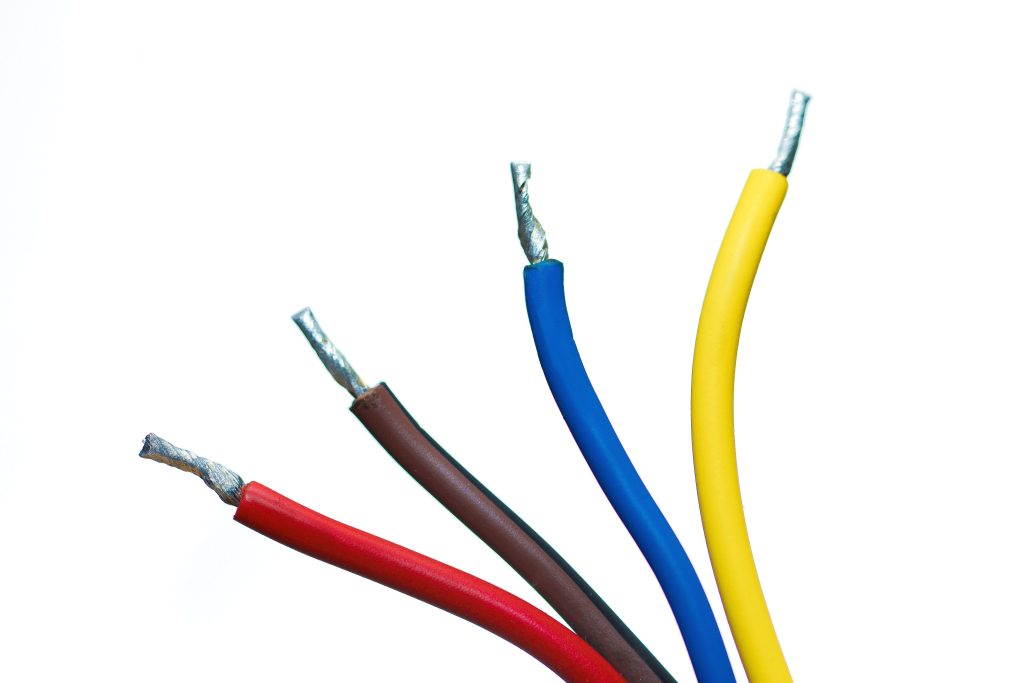
Voltage is measured in volts (V).
A voltage source may come from electrical mains, batteries, generators, and solar panels.
Common Voltage Supplies (residential/domestic)
Most homes use a single-phase voltage supply.
Examples: 115–120 V in some countries and 220–240 V in many countries, including much of the Caribbean and UK-standard systems. This supply is used for lights, fans, televisions, refrigerators, and outlets
Industrial Supply
Factories and larger buildings often use a three-phase supply. Typical values: about 400–415 V between phases. This is used for motors, heavy machinery, air-conditioning systems, and industrial equipment.
(Pixnio, 2017)
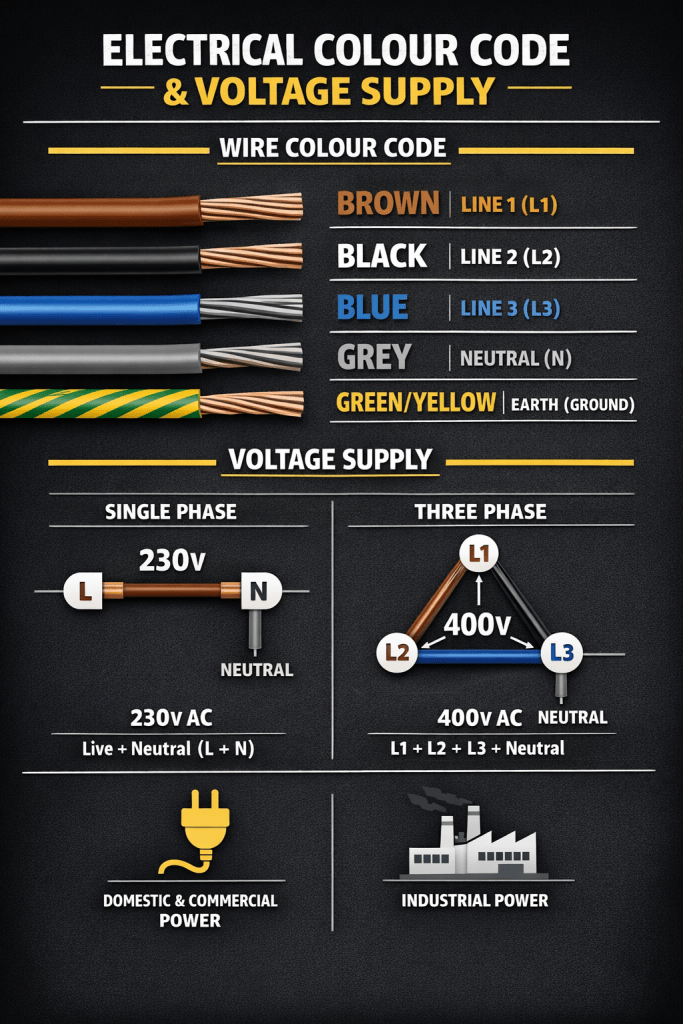
(OpenAI, 2026)
 ELECTRICAL TECHNOLOGY SOLUTIONS