ELECTRICAL GENERATION AND OHM’S LAW
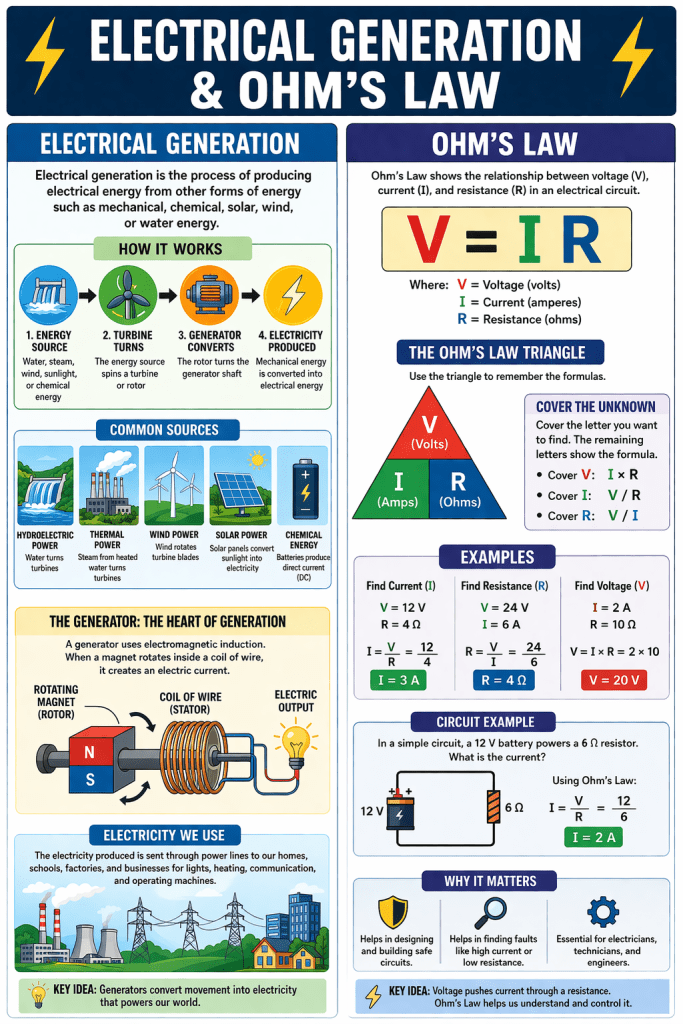
Electrical generation is the process of producing electrical energy from other forms of energy, such as mechanical, chemical, solar, wind, and water energy. In simple terms, it is the method by which electricity is created for use in homes, schools, industries, and businesses.
Ohm’s Law is one of the fundamental principles in electricity. It explains the relationship between voltage, current, and resistance in an electrical circuit.
At the end of this unit, the learners will be able to:
- explain the process of electrical generation.
- explain the process of electrical transmission.
- explain the process of electrical distribution.
- list the three (3) processes of electrical generation.
- describe the step-up process using transformers.
- describe the step-down process using transformers.
- state Ohm’s law
- write the formula for Ohm’s law V = I * R or I = 𝑽 / 𝑹 𝒐𝒓 𝑹=𝑽/𝑰
- calculate voltage, current, and resistance in a circuit using Ohm’s Law.
- state the unit of current.
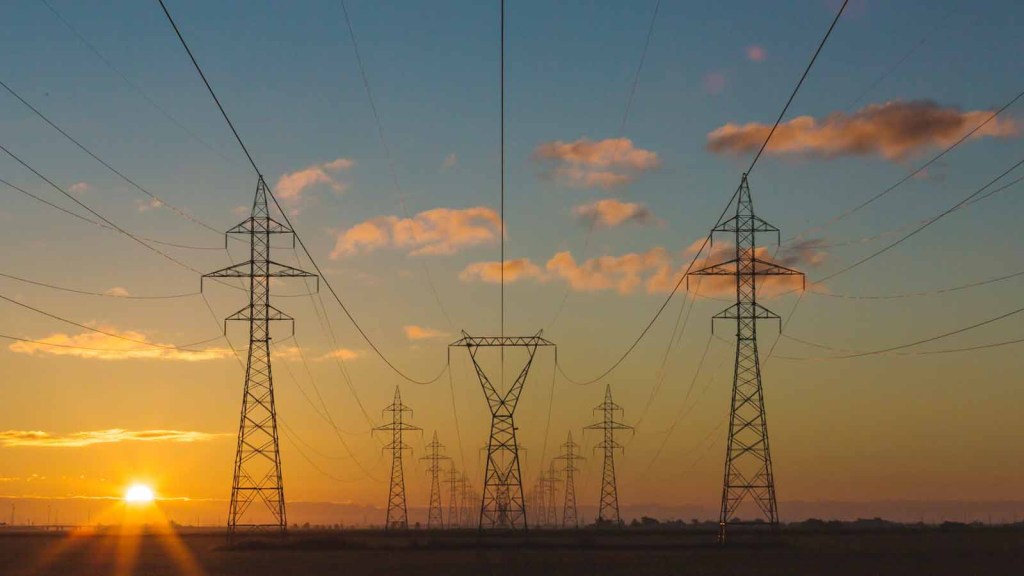
Electricity is commonly generated at power stations using generators. A generator converts mechanical energy into electrical energy through the principle of electromagnetic induction.
Ohm’s Law
Ohm’s Law is one of the fundamental principles in electricity. It explains the relationship between voltage, current, and resistance in an electrical circuit. The formula is I = V/R Where: V = Voltage (volts) I = Current (amperes or amps) R = Resistance (ohms)
(Ennomotive, 2024)
(OpenAI, 2026)
 ELECTRICAL TECHNOLOGY SOLUTIONS